Why Your New Office Interior in Dhaka is Already Rotting from the Inside
The Short Answer
New office interiors in Dhaka and Chittagong degrade prematurely due to a toxic combination of untreated engineered wood (MDF/particle boards), unmitigated subterranean termite infestations, and high indoor humidity caused by poor HVAC condensation management. During rapid commercial renovations, pre-construction termite proofing and timber seasoning are frequently skipped to meet tight deadlines, leaving hidden wall paneling, ceiling grids, and raised floors vulnerable to rapid fungal rot and termite destruction.
1Identifying the Problem
Key Indicators of Interior Decay & Termite Infestation
- Hollow Sounds: Wooden wall paneling, doors, or executive desks sounding hollow when tapped.
- Blistering Paint & Wallpaper Failure: Bubbling wallpaper or flaking paint along skirting boards, indicating dampness and subterranean pest activity.
- Mud Tubes on Concrete: Thin, brown mud conduits running along server room walls, electrical risers, or behind drywall.
- Musty Odors: Persistent earthy or damp smell near AC ducts and partition walls despite daily office cleaning.
- Fine Wood Powder (Frass): Small piles of sawdust-like droppings near custom cabinetry, door frames, or ceiling joints.
2Temporary DIY Remedies
Immediate Mitigation Steps Before Professional Intervention
- De-humidify Affected Zones: Lower facility HVAC settings and deploy commercial dehumidifiers to reduce indoor relative humidity below 50%.
- Isolate Water Condensation: Inspect and fix leaking AC drain lines hidden above suspended acoustic ceilings immediately.
- Do Not Disturb Mud Tubes: Refrain from spraying household aerosol sprays directly onto visible mud tubes, as this forces termites to scatter into deeper structural cavities.
- Clear Floor Contacts: Raise stored cardboard boxes and temporary wooden fittings off the bare concrete slab using rubber or steel stands.
- Schedule Emergency Thermal Survey: Contact certified pest and moisture management specialists to conduct a non-invasive thermal imaging scan.
The Hidden Danger (Why DIY Fails)
The Catastrophic Cost of Delay
Ignoring early signs of timber decay and pest infestation in commercial spaces leads to catastrophic structural failure, fire hazards from short circuits inside infested drywall conduits, and millions of BDT in business downtime.
- Electrical Short Circuits: Subterranean termites chew through PVC electrical wire conduits concealed inside wall panels, triggering major fires.
- Collapse of Suspended Ceilings: Moisture-laden plasterboard and rot-weakened timber framing can collapse directly onto employee workstations.
- Sick Building Syndrome (SBS): Spores from damp fungal mold (Toxic Black Mold) circulate through central AC systems, triggering chronic respiratory illnesses and absenteeism.
- Total Asset Loss: Structural timber replacement cost often exceeds 40% of the original interior fit-out budget.
The Multi-Crore Illusion: Glass, Steel, and Hidden Decay
Walk into any newly handed-over corporate headquarters in Gulshan, Banani, Motijheel, or Agrabad, and you are greeted by sleek minimalism: Italian marble tiles, acoustic suspended ceilings, custom veneer wall paneling, and ergonomically designed modular workstations. Companies spend tens of millions of BDT crafting these environments to embody prestige, efficiency, and brand dominance.
Yet, behind the polished veneer and architectural lighting, a silent catastrophe is taking root. Within six to twelve months of handover, facility managers frequently report unexplained wallpaper peeling, fine wooden dust near skirting boards, warping executive desk panels, and persistent musty odors. What appears on paper as a state-of-the-art office is, in reality, decaying from the inside out.
The Catalyst: Why Dhaka's Commercial Ecosystem Accelerates Interior Decay
Commercial interior decay in Bangladesh is not an accidental anomaly; it is an engineered side effect of specific construction, environmental, and operational practices. Understanding why your premium office space is rotting requires examining three overlapping vulnerabilities.
1. High Humidity and Moisture Entrapment
Dhaka and Chittagong feature tropical monsoon climates characterized by continuous high relative humidity (often exceeding 80% for six months a year). When high-end corporate fit-outs are installed inside newly constructed commercial towers, vast quantities of moisture remain trapped inside the un-cured concrete floor slabs and exterior brick masonry.
Furthermore, standard commercial HVAC operations aggravate this crisis. Air conditioning units run at continuous low temperatures during business hours and are switched off completely at night and on weekends. This drastic microclimate fluctuation causes rapid condensation cycles behind wall paneling and acoustic ceiling grids, creating ideal conditions for wood-rotting fungi and cellulose-seeking subterranean termites.
2. The Ubiquity of Untreated Engineered Wood (MDF and Particle Boards)
To cut costs and meet aggressive turnaround deadlines, interior designers and fit-out contractors frequently utilize Medium-Density Fiberboard (MDF), commercial plywood, and particle boards. Unlike solid teak or properly kiln-dried timber, engineered boards are composed of compressed wood fibers bound with synthetic resins.
Unless specifically pressure-treated with termiticides and anti-fungal preservatives during manufacturing, MDF acts as an irresistible sponge for indoor humidity and a high-energy food source for termites. Once moisture penetrates untreated MDF, the material swells permanently, loses structural integrity, and becomes a prime target for wood-destroying organisms.
3. Skipping Pre-Construction Termite Barriers
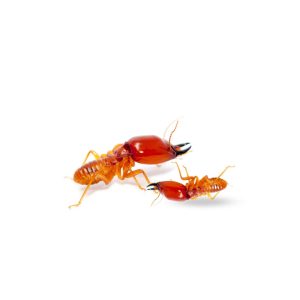
In the rush to complete interior fit-outs, building owners and facility managers routinely bypass subterranean chemical soil treatments and wood-proofing barriers. Subterranean termites (Coptotermes gestroi and Microtermes species) originate in the soil beneath urban buildings. They travel upward through micro-cracks in concrete columns, utility shafts, and elevator cores, relentlessly hunting for cellulose-based materials.
The Dual Threat: Fungal Dry Rot vs. Subterranean Termites
Understanding the destructive mechanisms at work is essential for facility managers and corporate decision-makers.
Fungal Dry Rot (Serpula lacrymans and mold species)
When wood moisture content exceeds 20%, airborne fungal spores germinate inside wall cavities and sub-flooring. These fungi digest the lignin and cellulose that give wood its structural strength. The wood turns dark, cracks into cube-shaped fragments, and crumbles under light pressure. Beyond structural ruin, fungal infestation releases millions of microscopic spores into central air ducts, driving up cases of corporate asthma, allergies, and Sick Building Syndrome (SBS).
Subterranean Termites
Subterranean termites operate in complete darkness behind drywalls, beneath raised access floors, and inside false ceilings. A single mature colony can contain over two million workers. Because termites hollow out timber from the inside while leaving a paper-thin outer shell intact, severe structural damage often remains completely invisible until catastrophic failure occurs.
The True Cost of Neglect: Financial, Operational, and Safety Risks
Treating interior rot and pest infestation as minor janitorial issues is a critical strategic error. The operational and financial impacts extend far beyond cosmetic restoration.
1. Extreme Capital Destruction
Replacing damaged interior fit-outs is significantly more expensive than initial installation. Demolishing infested wall paneling, re-wiring damaged electrical channels, replacing custom furniture, and re-applying chemical treatments requires operational shutdown, leading to severe financial loss.
2. Severe Fire and Electrical Hazards
Subterranean termites do not limit their consumption to wood; they regularly chew through PVC casing on high-voltage electrical wires and fiber-optic cables enclosed in wall cavities. Termite-damaged electrical conduits are a leading cause of untraceable electrical short circuits and commercial building fires in Bangladesh.
3. Health, Safety, and Employee Productivity Losses
Spores from rot fungi and airborne chemical byproducts degrade indoor air quality. Employees exposed to infested environments report higher frequencies of chronic headaches, fatigue, respiratory infections, and skin irritation, leading to increased absenteeism and reduced overall productivity.
Strategic Prevention Protocol: Safeguarding Corporate Real Estate Investment
Protecting corporate interior assets requires a proactive, multi-layered Integrated Pest Management (IPM) and moisture control blueprint.
- Mandatory Pre-Fitout Moisture Audit: Test concrete slab moisture levels using digital pinless moisture meters before laying carpet, laminate flooring, or wooden wall paneling. Never install timber over concrete with a moisture level above 12%.
- Specify Treated Timber and Borate-Treated MDF: Require contractors to furnish chemical treatment certification for all structural timber, plywood, and joinery used in the fit-out.
- Implement Perimeter Chemical Barriers & Baiting: Install non-repellent chemical soil barriers around column bases and utility entry points, accompanied by exterior monitoring bait stations.
- Optimize HVAC Condensation Management: Ensure AC condensate drain lines are insulated, slope correctly, and drop directly into drainage risers without leaking into ceiling voids.
- Conduct Non-Invasive Thermal Imaging Inspections: Schedule bi-annual infrared thermal imaging scans to detect hidden moisture pockets and termite thermal signatures behind wall panels before physical damage surfaces.
Investing 1% of your total interior budget into proactive moisture management and anti-termite chemical barriers saves up to 50% in future structural replacement and business disruption costs.
Frequently Asked Questions
Why do brand new office interiors in Dhaka get termites so quickly?
Can aerosol sprays eliminate termites in commercial drywall?
How long does professional anti-termite treatment last for office spaces?
Are the chemicals used in office termite treatments safe for employees?
Need a Permanent Solution?
Don't let pests ruin your peace of mind. Get a free inspection from Bangladesh's top-rated professionals today.