What Facility Managers in Dhaka Won't Tell You About Termite Damage
1Identifying the Problem
Key Signs of Hidden Commercial Termite Infestation
- Blistered or Mud-Smeared False Ceilings: Discoloration or sag in gypsum tiles caused by moisture and mud tubes above the visible ceiling layer.
- Hollow-Sounding Wooden Partitions: Decorative wood paneling or veneer doors sounding entirely hollow when tapped.
- Unexplained Electrical Short Circuits: Termites feeding on paper-backed wire insulation inside drywall conduit channels.
- Frass and Fine Mud Dust around Baseboards: Accumulation of tiny dirt pellets along executive desk skirts, skirting boards, and server room borders.
- Sticking Doors and Windows: Jammed office doors due to swelling frame timber caused by termite moisture absorption.
2Temporary DIY Remedies
Immediate Action Checklist Before Professional Intervention
- Isolate and Contain: Do not break mud tubes or spray consumer aerosol insecticides; this prompts termites to retreat and spread to adjacent office zones.
- Dehumidify the Zone: Lower the facility air conditioning settings and deploy industrial dehumidifiers to eliminate excess ambient moisture.
- Remove Cellulosic Material: Move cardboard boxes, backup paper files, and wooden pallets away from perimeter concrete walls.
- Inspect Cable Trays: Check server rooms and drop ceilings to ensure electrical conduits remain clear of active mud tracks.
- Contact Certified Pest Risk Specialists: Schedule a thermal imaging and microwave detection assessment immediately.
The Hidden Danger (Why DIY Fails)
The Devastating Costs of Ignoring Commercial Termites
"Ignoring termite activity in high-density commercial spaces converts minor pest issues into catastrophic structural and financial liabilities."
- Catastrophic Asset Devaluation: Termites can destroy millions of Taka worth of imported furniture, acoustic paneling, and teak veneers in under 90 days.
- Electrical Hazards and Data Center Downtime: Chewed cable insulation creates major short-circuit fire hazards and potential operational network downtime.
- Legal and Lease Compliance Breaches: Failure to maintain structural integrity violates commercial lease agreements and occupational safety standards in Bangladesh.
- Corporate Reputation Loss: Visible termite swarms or collapsing ceilings during client visits severely compromise corporate prestige.
The Silent Corporate Crisis in Dhaka and Chittagong Commercial Real Estate
In the bustling corporate hubs of Gulshan, Banani, Motijheel in Dhaka, and Agrabad in Chittagong, commercial real estate is undergoing a silent asset devaluation crisis. High-value office interiors—crafted with imported teak veneer, acoustic MDF paneling, drywalls, and modern false ceilings—are being systematically hollowed out from within. While facility managers often highlight HVAC efficiency, shiny marble lobbies, and round-the-clock security, there is a multi-million Taka secret many hesitate to report to C-suite executives: active subterranean termite infestation.
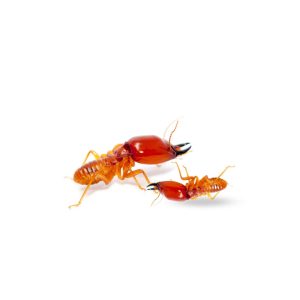
Subterranean termites, specifically Coptotermes gestroi, thrive in Bangladesh's tropical, high-humidity climate. Commercial high-rise structures, despite being composed predominantly of reinforced concrete and steel, act as giant chimneys that trap ambient moisture, heat, and cellulosic building materials. The outcome is a silent, accelerating destruction of corporate infrastructure that remains completely invisible until catastrophic structural or operational failure occurs.
The Secret playbook: Why Facility Managers Hide Termite Damage
Facility management in Bangladesh operates under intense pressure to control operational expenditure (OpEx). Conducting a comprehensive, soil-treated subterranean termite eradication program requires significant budget allocation, structural drilling, and temporary workplace disruption. Consequently, facility teams often default to cosmetic mitigation strategies rather than root-cause eradication.
1. The Cosmetic Cover-Up Strategy
When mud tubes appear along skirting boards or executive room doors, the standard immediate response is rarely an integrated pest management call. Instead, interior maintenance teams are instructed to apply superficial fixes:
- Quick Sanding and Repainting: Sanding down blistered paint and applying oil-based primer over termite-infested door frames to temporarily hide mud tracks.
- Plywood Patchwork: Removing damaged sections of wall partitions and covering them with thin plywood or wallpaper without treating the underlying concrete slab.
- Over-the-Counter Chemical Aerosols: Spraying kerosene or standard consumer insect sprays, which kills a few hundred worker termites on contact but repels the main colony deeper into the building structure.
"Cosmetic fixes do not eliminate termite colonies; they simply redirect the subterranean workers into your high-voltage electrical conduits, acoustic ceiling grids, and executive boardrooms."
2. Deferring Capital Expenditures (CapEx)
Commercial pest management contracts in many Dhaka towers are often awarded based on the lowest financial bid rather than technical competence. Low-cost vendors utilize diluted, non-residual chemicals or localized spot treatments. Facility managers may report that pest control is "active," masking the reality that the treatment applied is structurally ineffective against deep subterranean supercolonies.
How Termites Infiltrate Modern High-Rise Office Buildings
A common misconception among corporate executives and interior designers is that termite infestations only affect ground-floor properties or old wooden structures. In reality, subterranean termites easily reach the 20th or 30th floor of modern commercial towers in Dhaka through several structural vectors:
1. Plumbing and Electrical Expansion Joints
High-rise buildings require expansion joints and utility shafts running vertically through the structure. Termites construct shelter tubes inside these uninspected dark shafts, traveling upward from foundation soil through micro-cracks in concrete (as small as 0.8mm).
2. High Humidity and HVAC Condensate Lines
Centralized air conditioning systems produce constant condensation. Leaky drip pans or improperly insulated HVAC ducts inside drop ceilings create the ideal moist microclimate required for termites to establish secondary satellite colonies without returning to ground soil.
3. Cellulosic Interior Architecture
Modern office aesthetics rely heavily on cellulosic materials. Gypsum boards with paper facing, acoustic insulation panels, wooden partition frames, and raised access flooring provide an unlimited food source for foraging termite colonies.
Unseen Vulnerabilities: Acoustic Ceilings, Server Rooms, and Executive Furniture
The damage caused by termites extends far beyond ruined wooden cabinets. In commercial enterprises, subterranean termites pose severe operational, regulatory, and financial risks:
1. Electrical Short Circuits and Server Room Downtime
Termites seek out warm, enclosed environments. Electrical conduit pipes inside drywalls act as highway systems for mud tubes. As termites chew through paper-backed insulation and soft plastics around high-voltage cables, they create severe electrical short circuits, server outages, and extreme fire hazards.
2. Structural Failure of False Ceilings
Suspended gypsum and grid ceiling systems rely on perimeter wooden or paper-faced structural supports. When termites consume these unseen structural backings above working staff, total ceiling collapses become an imminent hazard, creating huge corporate liability risks under local safety regulations.
3. Irreparable Devaluation of Fixed Assets
Custom-built executive desks, high-density file storage, soundproof conference room paneling, and wooden flooring represent massive capital investments. Once termites penetrate these structures, restoration is impossible; complete demolition and replacement are required.
The Financial Comparison: Proactive Eradication vs. Emergency Overhaul
Delaying commercial termite management leads to exponentially escalating costs over time. The table below illustrates the stark financial difference between proactive defense and reactive restoration in a standard 10,000 sq. ft. corporate office in Gulshan or Banani:
| Metric | Proactive Pest Management Strategy | Reactive Structural Restoration Strategy |
|---|---|---|
| Initial Expenditure | Moderate preventive baiting & barrier treatment | Low initial cost (Cosmetic paint/patchwork) |
| Secondary Impact | Zero operational downtime | Unplanned office shutdown (5-10 business days) |
| Asset Damage | Protected corporate assets | Demolition of acoustic panels, partitions, and ceilings |
| Electrical Risk | Mitigated fire & short circuit risk | High risk of server room downtime & cabling replacement |
| Total Cost (3 Years) | Controlled, predictable OpEx | Up to 10x higher emergency CapEx replacement cost |
Actionable Steps for Facility Directors, Designers, and Executives
To safeguard corporate real estate assets in Dhaka and Chittagong, business leaders must implement an authoritative, scientifically verified pest management protocol:
1. Mandate Thermal Imaging and Radar Audits
Require facility management to conduct bi-annual non-invasive inspections using thermal imaging cameras and acoustic moisture meters to detect sub-surface heat signatures and moisture pockets within walls and false ceilings before physical destruction manifests.
2. Specify Non-Repellent Chemical Barriers and Baiting Protocols
Ensure that commercial pest control vendors utilize transfer-effect non-repellent termiticides (such as Fipronil or Imidacloprid) or advanced termite baiting systems. Unlike repellent chemicals, transfer-effect active ingredients are carried back to the central queen by worker termites, guaranteeing full colony elimination.
3. Enforce Termite-Proof Interior Design Standards
Interior designers working in commercial spaces must mandate pre-construction treatments for all timber, marine plywood, and MDF structures. Metallic framing should be prioritized for concealed drywall studs, and baseboards must incorporate synthetic damp-proof membranes along concrete interfaces.
Conclusion: Protecting Corporate Assets Before It Is Too Late
Termite infestation in commercial real estate is not merely a housekeeping inconvenience; it is a serious financial liability and operational risk. Relying on cosmetic cover-ups, low-bid chemical treatments, and reactive maintenance places corporate assets, electrical safety, and staff welfare in jeopardy. By demanding total transparency from facility managers and implementing professional-grade, colony-elimination protocols, corporate leaders in Dhaka and Chittagong can secure their infrastructure and preserve asset value for years to come.
Frequently Asked Questions
Why do termites affect upper floors in high-rise towers in Gulshan and Banani?
Why are consumer sprays and kerosene ineffective against corporate termite infestations?
How does thermal imaging help detect termite activity behind drywalls?
What is the safest long-term termite solution for busy corporate offices?
Need a Permanent Solution?
Don't let pests ruin your peace of mind. Get a free inspection from Bangladesh's top-rated professionals today.